Discover how AI-driven advertising for targeting optimization reduces wasted ad spend while improving ROI. Complete implementation guide with techniques.
Running an e-commerce business means every dollar counts, especially when it comes to advertising. Yet here's a frustrating reality: digital advertisers waste 30-40% of their budget on poorly targeted ads. You're probably nodding your head right now, thinking about those campaigns that seemed promising but delivered disappointing results.
But here's the game-changer: AI-driven advertising for targeting optimization is designed to help reduce this waste while optimizing for better results. We're not talking about some futuristic concept – this technology is available right now, and smart e-commerce owners are already using it to achieve 40% higher ROI compared to manual campaigns.
AI-driven advertising for targeting optimization uses machine learning algorithms, predictive analytics, and real-time data processing to identify and reach the most relevant audiences. This approach improves targeting precision, helps reduce wasted ad spend, and is designed to improve conversion rates compared to traditional targeting methods.
In this comprehensive guide, you'll discover exactly how AI-driven advertising for targeting optimization transforms advertising efficiency through automation and intelligence. We'll walk through proven techniques, implementation steps, and real results that you can apply to your own campaigns starting this week.
What You'll Learn
By the end of this guide, you'll have a complete roadmap for implementing AI-driven advertising for targeting optimization in your campaigns. Here's exactly what we'll cover:
- How AI-driven advertising for targeting optimization works and why it improves upon manual methods
- 4 proven AI targeting techniques with real e-commerce examples
- Step-by-step implementation guide to get started this week
- Bonus: Tool selection framework and common mistakes to avoid
Whether you're spending $1,000 or $100,000 monthly on ads, these strategies will help you optimize for bettercustomer acquisitionefficiency while freeing up your time for other business priorities.
What is AI-Driven Advertising for Targeting Optimization?
Let's start with a clear definition. AI-driven advertising for targeting optimization is the use of artificial intelligence and machine learning to automatically identify, reach, and engage the most valuable potential customers for your business. Instead of manually setting demographics and interests, AI analyzes vast amounts of data to find patterns humans can't detect.
The key components include:
Machine Learning Algorithms: These continuously analyze user behavior, campaign performance, and conversion patterns to identify what makes someone likely to buy from you.
Predictive Analytics: AI forecasts which users are most likely to convert, when they're most likely to buy, and how much they might spend.
Real-Time Optimization: The system automatically adjusts bids, budgets, and targeting parameters based on live performance data.
This differs dramatically from traditional targeting, where you manually select demographics like "women aged 25-45 interested in fashion." Instead, AI might discover that your best customers are "users who browse product reviews on mobile devices during lunch hours and have previously engaged with sustainable brand content."
The evolution has been remarkable: we've moved from manual targeting (guessing who might buy) to rules-based automation (if-then scenarios) to intelligent AI-driven systems that learn and adapt continuously.
Analify AI — شاشة الـ media buyer مجاناً
بطّل تخمين أرقام الربح.
وصّل Shopify وMeta وTikTok وBosta في 5 دقايق.
ابدأ مجاناً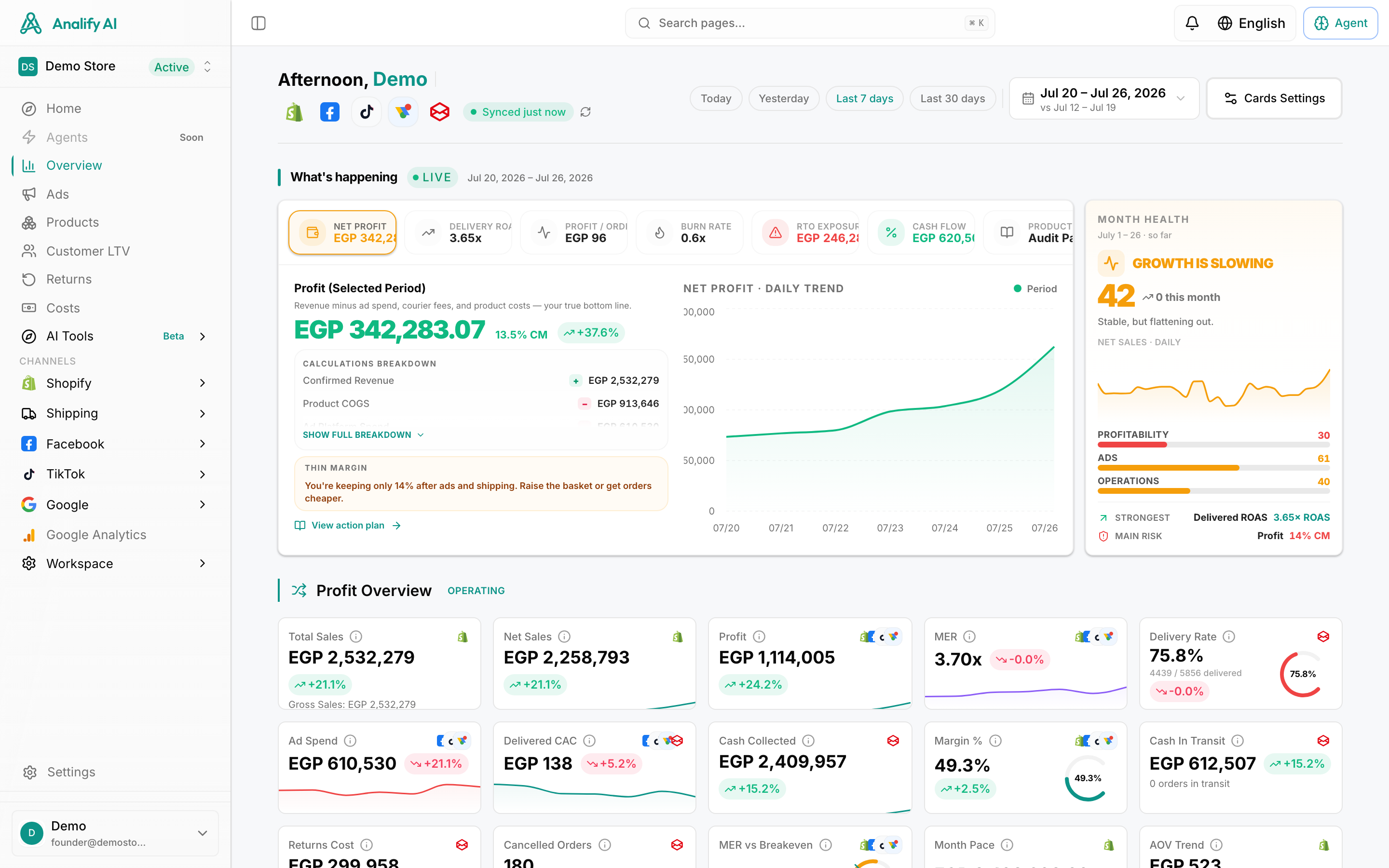
How AI Transforms Ad Targeting
Understanding how AI actually improves your targeting helps you make better decisions about implementation. Let's break down the four core ways AI transforms your advertising results.
Machine Learning Algorithms
Traditional targeting relies on basic demographics and interests you select manually. AI goes deeper, recognizing complex behavioral patterns that predict purchase intent.
For example, instead of targeting "people interested in fitness," AI might identify "users who view multiple product reviews, compare prices across sites, and typically purchase on weekends." This level of precision comes from analyzing thousands of data points simultaneously.
E-commerce Example: A supplement company discovered their AI system identified "high-intent browsers" – people who viewed product ingredient lists, read customer reviews, and visited FAQ pages. These users converted at 3x the rate of general "fitness interest" audiences, even though they represented a smaller group.
The beauty of machine learning is continuous improvement. Each conversion teaches the algorithm something new, making future targeting more precise. This is why AI targeting for ads consistently helps improve performance over static manual targeting over time.
Pro Tip: Start tracking micro-conversions like "viewed ingredients" or "read reviews" in your analytics. These signals help AI identify high-intent users before they even add items to cart.
Predictive Analytics
While traditional targeting looks at past behavior, AI analyzes data to help predict future actions. This shift from reactive to proactive targeting can dramatically improve efficiency.
Predictive analytics examines factors like browsing patterns, engagement timing, device usage, and purchase history to forecast conversion probability for each individual user. It also helps predict customer lifetime value, helping you bid more strategically for users likely to become repeat customers.
E-commerce Example: An online furniture retailer used predictive analytics to identify the optimal timing for cart abandonment retargeting. Instead of sending emails immediately, AI discovered that waiting 4 hours for furniture browsers (vs. 1 hour for accessories) increased recovery rates by 45%.
This predictive capability extends to budget allocation. AI can help forecast which audiences will perform best during different times, seasons, or market conditions, automatically shifting spend before you even notice the trends.
Real-Time Optimization
Traditional campaigns require manual monitoring and adjustment. AI makes thousands of micro-optimizations every hour, responding to performance changes faster than any human could.
Real-time optimization includes:
- Instant bid adjustments based on conversion signals
- Dynamic budget allocation across audiences and campaigns
- Automatic pause/restart decisions for underperforming elements
E-commerce Example: A fashion retailer's AI system automatically detected that their summer dress ads were performing poorly due to an unexpected cold snap. Within 2 hours, it had shifted 70% of the budget to jacket and sweater campaigns, maintaining overall ROAS while competitors continued spending on irrelevant seasonal items.
This speed advantage becomes crucial during high-competition periods like Black Friday, when manual optimization simply can't keep pace with rapidly changing market conditions.
Personalization at Scale
Perhaps the most powerful aspect of AI-driven advertising for targeting optimization is delivering personalized experiences to thousands of users simultaneously. This goes beyond showing different ads – it's about matching the right message, product, and timing to each individual.
AI analyzes individual browsing behavior, purchase history, and engagement patterns to determine:
- What products to show
- Which creative elements to emphasize
- When to display ads for maximum impact
E-commerce Example: A home goods store implemented AI-driven personalization that showed different products based on browsing history and purchase intent signals. Users who viewed multiple kitchen items saw cookware ads, while those browsing bedroom content saw bedding promotions. This approach increased click-through rates by****66.8% compared to generic product ads.
The scalability is remarkable – AI can create essentially unique experiences for each user while maintaining consistent brand messaging and campaign objectives.
Key AI Targeting Techniques
Now let's dive into specific techniques you can implement. These four approaches represent the most effective AI targeting strategies for e-commerce businesses.
Behavioral Targeting Enhanced by AI
Traditional behavioral targeting focuses on basic actions like "visited product page" or "added to cart." AI enhancement recognizes micro-behavioral patterns that reveal deeper intent signals.
Traditional Approach: Target users who viewed your product category in the last 30 days.
AI Enhancement: Target users who exhibit specific behavioral sequences like "viewed multiple products, read reviews, compared prices, and returned within 3 days without purchasing" – indicating high intent but price sensitivity.
E-commerce Example: A skincare brand discovered that their best customers followed a specific pattern: they viewed ingredient lists, read at least 3 reviews, and visited the FAQ page before purchasing. AI identified this "research-heavy buyer" segment and created targeted campaigns that emphasized ingredient transparency and customer testimonials. These campaigns achieved 40% lower customer acquisition costs than broad targeting.