Learn how to write advertisement text that converts with 7 psychology-driven steps. Get frameworks, platform-specific tips, and AI optimization strategies.
You've spent hours crafting what you thought was the perfect ad copy, only to watch your click-through rates flatline at 0.8%. Sound familiar?
You're not alone – we've all been there, staring at disappointing metrics and wondering where we went wrong. Here's the thing: writing converting advertisement text isn't about being clever or creative (though those help). It's about understanding customer psychology and following a proven framework that speaks directly to your audience's needs and desires.
Advertisement text should focus on customer benefits over product features, use specific numbers and social proof, match platform tone, include clear calls-to-action, and be tested systematically for optimization.
In this guide, we'll walk through the psychology-driven approach that successful e-commerce brands use to create converting advertisement text. Plus, we'll show you how modern AI tools can streamline your efforts while maintaining the brand voice your customers crave.
What You'll Learn
- How customer psychology drives purchasing decisions (and how to leverage it)
- The 7-step framework successful e-commerce brands use for converting advertisement text
- Platform-specific tone matching strategies for Facebook, Instagram, and Google
- AI-assisted optimization that reduces manual copy creation time
- Bonus: Testing strategies that can significantly improve conversion rates
Start With Customer Psychology, Not Product Features
Here's the mistake 90% of us make: we write advertisement text about our products instead of our customers' problems. Customer psychology in advertising refers to understanding the emotional and logical triggers that motivate people to make purchasing decisions, then crafting messages that speak directly to those motivations.
Think about it – when someone sees your ad, they're not thinking "I wonder what features this product has." They're thinking "Will this solve my problem?" or "Will this make me feel better about myself?"
Let's say you're selling a fitness tracker. Instead of leading with "Advanced heart rate monitoring with 24/7 tracking capabilities," try "Finally, see exactly how your daily habits are affecting your health goals." The first focuses on what the product does; the second focuses on what the customer gets.
The Benefits vs Features Framework:
- Feature: "Waterproof to 50 meters"
- Benefit: "Never worry about damaging your investment during workouts or swimming"
- Feature: "30-day battery life"
- Benefit: "Set it once and forget about charging for an entire month"
This psychological shift is crucial because people buy outcomes, not specifications. When you understand this, your creative testing at scale becomes much more effective because you're testing messages that actually resonate with human behavior.
Pro Tip: Use Analify audience insights to identify the specific pain points your customers mention most often. This data-driven approach to customer psychology takes the guesswork out of benefit identification.
Analify AI — شاشة الـ media buyer مجاناً
بطّل تخمين أرقام الربح.
وصّل Shopify وMeta وTikTok وBosta في 5 دقايق.
ابدأ مجاناً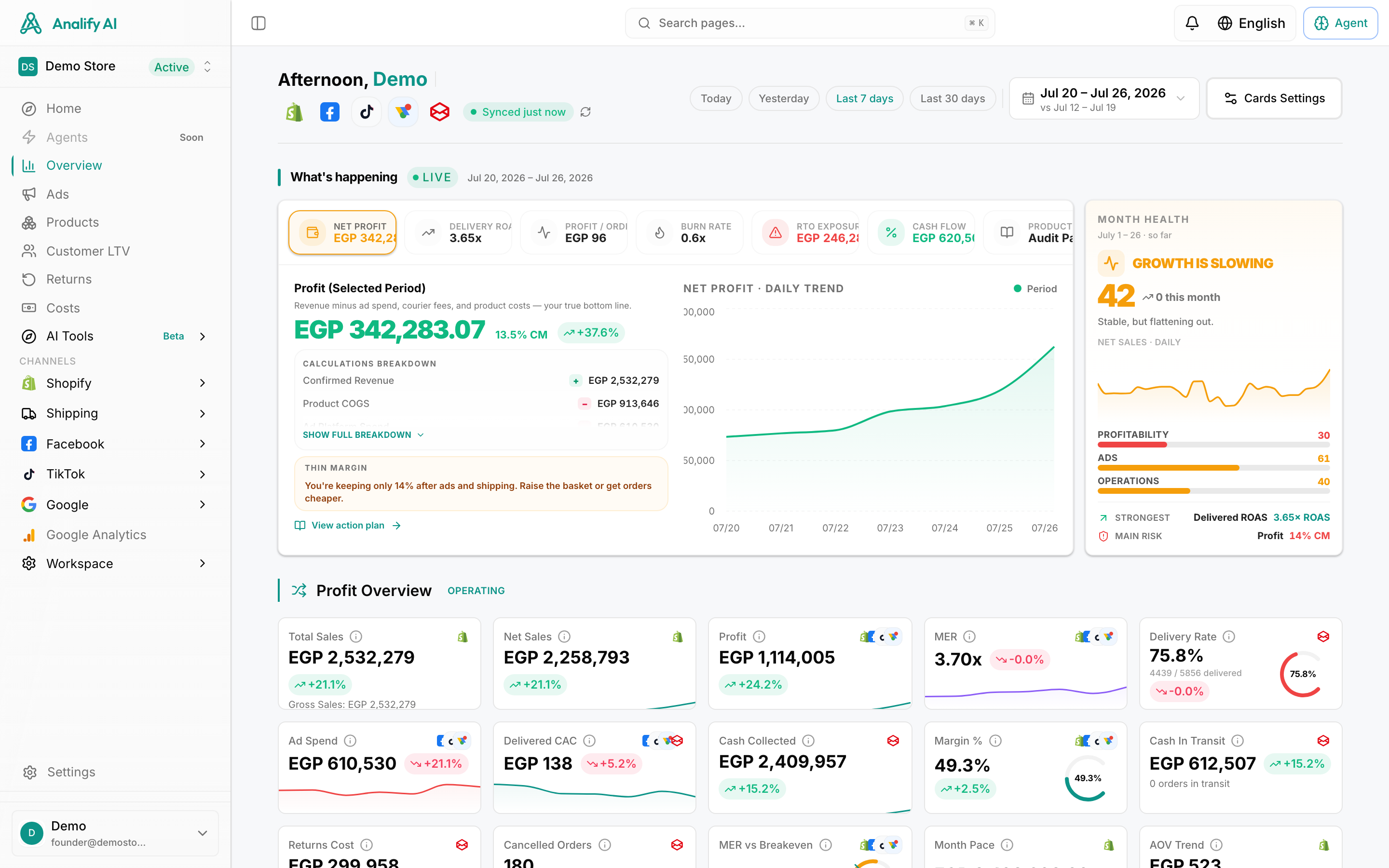
The 7-Step Advertisement Text Framework
Now let's dive into the framework that consistently produces converting advertisement text. This isn't theory – it's what works in the real world of e-commerce advertising.
Step 1: Identify Core Customer Pain Points
Before you write a single word, you need to understand what keeps your customers up at night. This goes beyond surface-level problems to the emotional core of their frustrations.
For example, if you sell skincare products, the surface problem might be "acne," but the deeper pain point is "feeling self-conscious in social situations." Your advertisement text should address both levels.
Quick Research Method: