Learn about audience-based marketing, its benefits, and implementation. Target the right people, boost campaigns, and drive better results for your business.
When it comes to marketing campaigns, there are three main levers you can adjust to improve performance: creative, copy, and targeting. While all three elements are crucial, targeting—reaching the right audience—can either make or break your campaign’s success.
Audience-based marketing helps you identify and target the right people who actually want and need your products.
By focusing on them, you can boost engagement for your campaigns, drive more conversions, and increase return on investment.
In this article, we’ll discuss what audience-based marketing is, how it works, and its benefits. Also, we’ll share a step-by-step process on how you can get started with audience-based marketing for your business. Let’s dive in!
What is audience-based marketing?
Audience-based marketing is a strategy that tailors marketing efforts to the preferences of audiences who are likely to be interested in your products.
In simple words, it only focuses on people who might want what you’re selling instead of reaching out to everyone.
The primary goal of audience-based marketing is to deliver personalized, relevant content to the right audience.
According to Twilio Segment’s The State of Personalization 2024 report, 89% of business leaders believe personalization is key to their business success in the next three years.
Marketers implementing audience-based marketing often come across similar-sounding terms that can lead to confusion. It’s important to understand how these terms are different so you can choose the right strategy that aligns with your business goals. Let’s clarify two such terms people often mix up with audience-based marketing:
- People-based marketing: Targets individual consumers across multiple devices and digital channels using unique identifiers like email addresses or phone numbers.
- Audience-based buying: Uses data to make informed ad placement decisions to reach the right people at the right time.
Now that you’re clear with these terms, let’s understand another common marketing approach. It’s called content-centric marketing—a strategy that prioritizes valuable content creation to attract and engage audiences. Let’s explore how audience-based marketing and content-centric marketing are different.
Audience-based marketing vs. content-centric marketing
Here are the major differences between audience-based marketing and content-centric marketing:
How does audience-based marketing work?
Audience-based marketing works by focusing on people who are most likely to be interested in your products.
It involves gathering customer data to create buyer personas and custom audiences. These are used by marketers and advertisers to develop personalized content and ads. For example, if you run a pet store, you might create separate ads for dog and cat owners.
Later, this tailored content is distributed through digital marketing channels where your audience spends most of their time, such as specific social media platforms or websites.
When potential new customers come across your content, they are more likely to engage with it because it resonates with their specific needs and interests.
This targeted approach increases the chances of conversion and helps build stronger relationships with your customers.
The benefits of audience-based marketing
Audience-based marketing offers several benefits, such as:
- Higher engagement rates: Personalized content makes your audience more likely to engage with your brand. For instance, personalized emails increase open rates by 26%.
- Increased ROI: Audience-based marketing helps in creating targeted campaigns. 89% of companies report positive ROI from targeted campaigns.
- **Increased CLV (Customer Lifetime Value):**Personalized content and offerings drive repeat purchases, increasing CLV. Deloitte Digital says customers spend 37% more with brands that provide personalized experiences.
- Data-driven decision making: Audience-based marketing provides valuable insights into customer behavior and preferences. These insights can help you make data-driven decisions in marketing, product development, customer service, and overall business.
Analify AI — شاشة الـ media buyer مجاناً
بطّل تخمين أرقام الربح.
وصّل Shopify وMeta وTikTok وBosta في 5 دقايق.
ابدأ مجاناً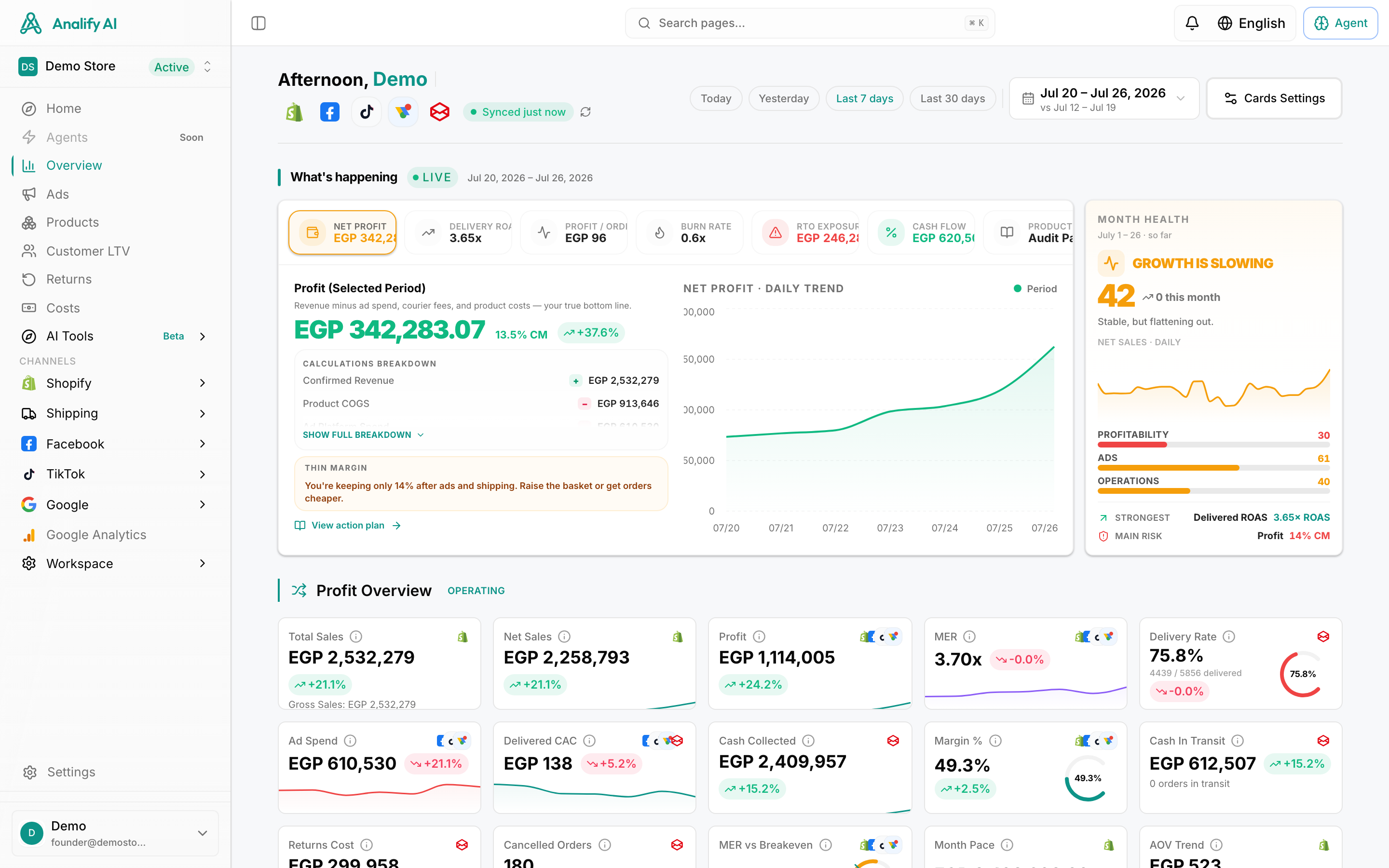
How to get started with audience-based marketing
Before we dive into the steps of implementing audience-based marketing, it’s important to note that it’s just one element in a successful marketing campaign. Other crucial elements include:
- Creative: Visual elements that capture attention
- Ad copy: Persuasive text that conveys your message
- Product offer: Value proposition you present to potential customers
While all these components are essential, we’ll focus on the targeting aspect as it forms the foundation of effective marketing.
By getting your audience right, you can tailor your creative, copy, and product offer more effectively.
Here are the seven steps to implement audience-based marketing for your business:
Step #1: Define your target audience
Who is more likely to buy your products? Identify these ideal customers and create detailed buyer personas—fictional profiles that represent your target audience.
Consider factors like:
- Age, gender, and where they live
- Income level and occupation
- Hobbies and interests
- How they prefer to communicate
- Their buying habits and what motivates them
For instance, if you're selling eco-friendly cleaning products, your buyer persona can be:
Eco-conscious Emily, a 32-year-old suburban homeowner with a household income of $95,000; she works as a marketing manager at a design agency. Emily enjoys yoga, reads green living blogs, and values sustainability. She prefers Instagram for product discovery. She's willing to pay more for eco-friendly, effective cleaning solutions that align with her values.
Make sure you craft the buyer persona with specific details so it feels like a real person with a name and relevant background.
Step #2: Collect and analyze audience data
Now that you've created your buyer personas, it's time to gather real-world data to refine them. Use different tools and methods to gather information about your current and potential customers.
The best ways to gather this data are:
- Website analytics
- Social media insights
- Customer surveys
- Purchase history
- Email interaction metrics
Bonus tip: Reddit can be a valuable research tool. Relevant subreddits offer authentic, unfiltered insights into your audience’s interests, pain points, and language.
Analyze this data to find patterns and trends. Are your assumptions about your target audience correct? You might find that Eco-conscious Emily prefers watching YouTube videos instead of using Instagram for product research.
Remember, data collection is an ongoing process. You must regularly update your buyer personas as you learn more about your audience.
Step #3: Segment your audience
You need to further divide your audience into smaller, more specific groups. This segmentation allows for even more targeted marketing efforts.
Consider segmenting your audience based on factors such as:
- Purchase behavior
- Level of engagement
- Stage in the customer journey
- Interests or preferences
For example, your eco-friendly cleaning product company might segment customers like this:
- New homeowners (like Emily)
- Parents of young children
- Pet owners concerned about pet-safe products
- Bulk buyers for small businesses
This segmentation helps you create campaigns that target different audience segments. For instance, you could offer Emily and other new homeowners a "Green Home Starter Kit" with your most popular products.
Step #4: Develop personalized content
With your audience segments defined, create content that speaks directly to each group. Tailor your messaging, visuals, and offers to address the specific needs and interests of each segment.
For your eco-friendly cleaning product company, you might consider:
- Creating blog posts about chemical-free cleaning for new parents
- Developing email campaigns with bulk-buying discounts for small businesses
- Crafting Facebook ads showcasing pet-safe products
If you are just starting out on Facebook advertising and don’t know what type of ads to create, you can take a look at the Meta Ad Library for inspiration.
Additionally, gather information about the cost of crafting Facebook ads to plan your budget accordingly. You can also try this Facebook Ad Cost Calculator to get an idea.
Step #5: Choose the right marketing channels
Your content is ready. Now comes the question of where to distribute it. For this, identify different platforms where each audience segment spends their time. Then, find out the most effective social media advertising platforms to place your ads.
For your eco-friendly cleaning product company, you might consider:
- Sharing your chemical-free cleaning blog posts on online forums
- Sending bulk-buying discount emails directly to small business owners
- Advertising pet-safe products on Facebook
When it comes to Meta ads, Analify offers powerful tools to maximize your targeting effectiveness:
- Audience Launcher allows you to select from over 100 audiences covering your entire sales funnel. Also, its AI technology helps you to discover and target your most profitable audiences.
- Audience Studio analyzes your account performance, ranks interests by profitability, and predicts top targeting options. It helps you discover new profitable opportunities.
- Additionally, Analify AI Marketer recommends audiences for testing and allows you to launch them with just a few clicks, further streamlining your audience targeting process.