Discover specialized ad tech platforms for beauty products that achieve 2.2–12.72x ROAS. Complete guide with implementation steps and platform comparisons.
Sarah launched her indie skincare line with $5,000 in savings and big dreams. Six months later, she was paying $150+ CPM on Facebook ads and barely breaking even.
Sound familiar? You’re not alone. Beauty brands face some of the highest advertising costs in the world, with CPMs ranging anywhere from $14 to $600 depending on competition and targeting precision.
The turning point for brands that finally scale? Using an ad tech platform for beauty products — not generic tools built for every industry, but systems designed specifically for cosmetics, skincare, haircare, and personal care brands.
Unlike traditional platforms that treat lipstick the same as laptops, beauty-focused ad tech understands your unique challenges: shade variations, seasonal product cycles, compliance around before/after creatives, and the visual storytelling beauty consumers expect.
This guide breaks down exactly how beauty brands achieve 2.2–12.72x ROAS using the right ad tech platform for beauty products, with real case studies, implementation timelines, and platform comparisons.
What You’ll Learn
- How beauty brands achieve 2.2–12.72x ROAS with specialized ad tech
- Step-by-step platform selection criteria based on your brand type and budget
- Real implementation timelines from setup (3 days) to scaling (30–90 days)
- Tracking solutions recovering up to 64% of lost conversions post-iOS14
The Beauty Advertising Landscape in 2025
Advertising in beauty isn’t what it used to be. The industry now pumps $7.7 billion annually into digital advertising, growing steadily as competition skyrockets.
Discovery has shifted as well — 87% of beauty product discovery now happens on social platforms. With beauty e-commerce projected to reach $358.4 billion by 2026, the opportunity is massive, but so are the challenges.
On average, beauty brands now see:
- $29 cost per acquisition
- $14.06 CPM
- 7.10% conversion rates (when properly optimized
Most beauty brands are not properly optimized — which is why so many struggle.
Pro Tip: An ad tech platform for beauty products uses AI and automation tailored specifically for cosmetics, skincare, and haircare brands. These tools optimize campaigns across Meta, TikTok, and Google while adjusting for unique beauty buying behaviors.
The beauty brands winning in 2025 aren’t boosting posts. They’re leveraging specialized ad tech platforms for social media advertising that handle everything from shade personalization to long-form skin concerns.
Analify AI — free media buyer view
Stop guessing your profit.
Connect Shopify, Meta, TikTok and Bosta in 5 minutes.
Start free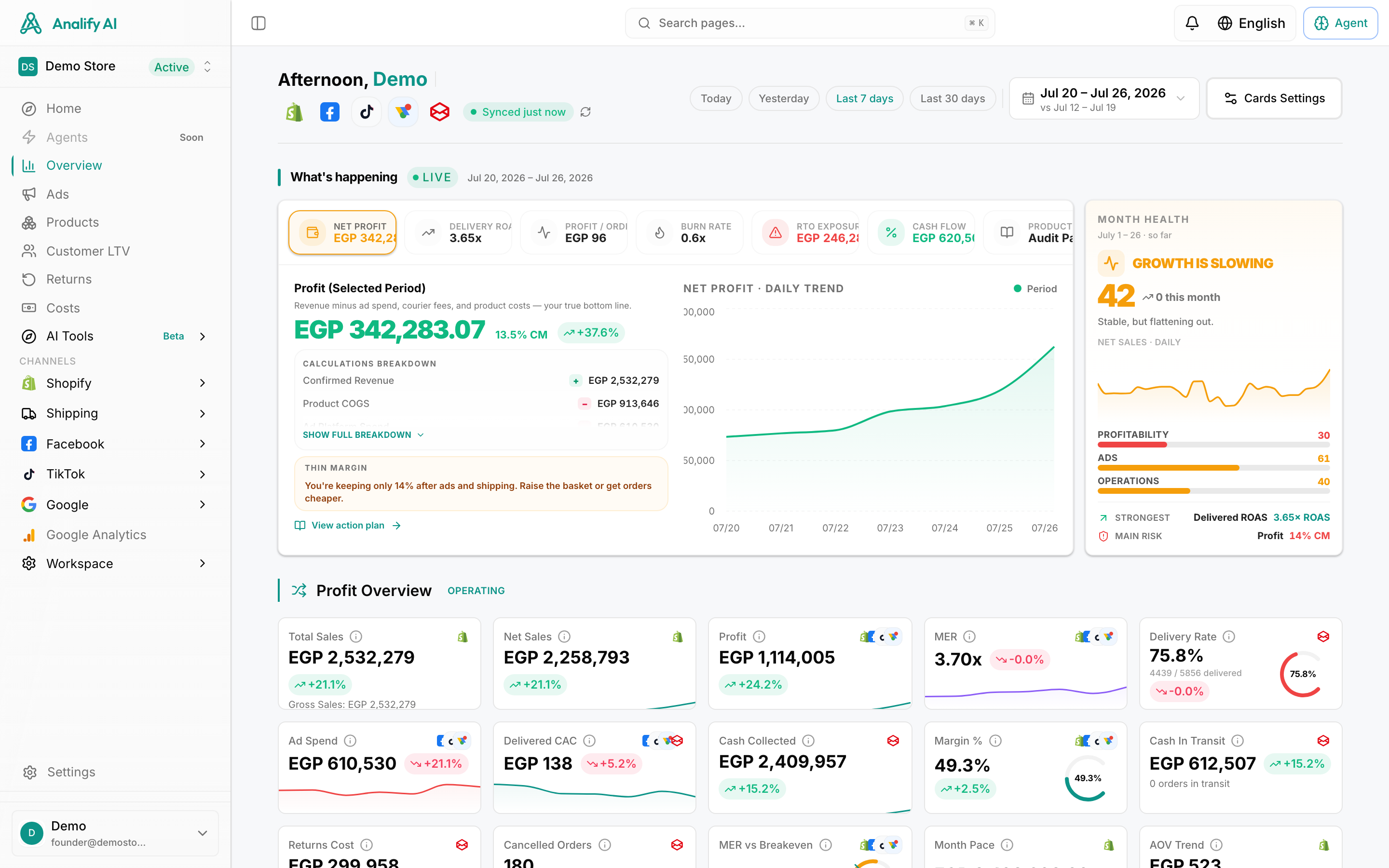
Why Beauty Brands Need Specialized Ad Tech Platforms
Beauty brands operate in one of the most competitive environments in digital advertising. Here’s why generalist platforms fail — and what specialized beauty ad tech fixes.
Escalating Advertising Costs
Beauty CPMs can exceed $600 during peak seasons, especially in skincare and premium makeup categories. With customer acquisition costing around $29, every inefficiency destroys profit margins.
Proper audience modeling and AI-driven optimization are now essential — not optional.
Creative Production Bottlenecks
Beauty brands rely on high-quality visuals, before/after content, and fast-paced creative refreshes. Traditional creative production takes 2+ weeks per new ad and costs $500–$2,000 per set.
AI-powered creative tools now cut that cost by up to 80%, generating variations in minutes that would normally take weeks.
Complex Audience Targeting
Most beauty brands juggle dozens of customer segments:
- Skin types
- Skin concerns
- Age groups
- Shade ranges
- Seasonal needs
Manual testing can take months. Beauty-specific ad tech tests these simultaneously and identifies winners automatically.
Post-iOS14 Attribution Collapse
With iOS14 wiping out visibility for many brands, beauty brands especially suffer because of their longer buying cycles and multi-step research phases.
Without server-side tracking, most beauty brands lose 20–30% of conversions in reporting.
Pro Tip: Manual campaign management usually requires 40+ hours monthly. Ad tech automation reduces that to 5–10 hours while improving performance with 24/7 optimization.
This is exactly why beauty brands now lean on cloud-based ad tech platforms built for cosmetics and skincare.
Types of Ad Tech Platforms for Beauty Brands
Not all ad tech platforms are created equal, especially in the beauty industry. Here's how to navigate the landscape and match the right platform to your brand’s needs.
Creative Automation Platforms (Zeely, Mintly)
These platforms focus on AI-powered ad creation, turning your product images into high-performing visuals. They help you generate multiple product shots, lifestyle images, and even simple videos without relying on a full creative team.
Best for: Established brands with internal media buyers who primarily need creative production support.
Limitation: They don’t handle targeting, optimization, budgeting, or campaign automation — you still have to do all of that manually.
Campaign Optimization Platforms (Analify, AdRoll)
These are full-funnel automation platforms that handle the heavy lifting: audience creation, performance monitoring, creative testing, and budget allocation.
Best for: Beauty brands wanting scalable, AI-powered optimization with minimal daily involvement.
Advantage: Continuous optimization, real-time alerts, and automated budget shifting prevent wasted spend and increase ROAS without constant manual effort.
Virtual Try-On Platforms (Perfect Corp, Revieve)
These are AR-powered visualization platforms designed for shade matching, foundation matching, lipstick try-ons, and other visuals where color accuracy matters.
Best for: Cosmetic brands with large shade ranges or products requiring visual precision.
Impact: Virtual try-on capabilities can increase engagement by 75% and lift conversions by 30%.
Multi-Channel Attribution Platforms
These platforms focus on tracking and measurement across all touchpoints: Meta, TikTok, Google, email, SMS, and your website. Beauty brands with long consideration cycles need this to understand what’s actually driving conversions.
The truth: Beauty brands often need a mix of these tools. But modern platforms like Analify increasingly combine creative automation, optimization, and advanced tracking into a single system — eliminating the need to juggle multiple tools.
Essential Features for Beauty Brand Success
Every beauty category has its own advertising challenges. Here’s what to look for based on your product type.
For Skincare Brands
Skincare requires education, trust, and clear results. The right platform should offer:
- Before/after compliance protection
- Ingredient-focused creative generation
- Clinical claims support to avoid disapprovals
- Seasonal automation for summer vs winter skin concerns
For Cosmetics Brands
Makeup brands deal with shade complexity and visual precision. Look for tools that offer:
- Automated shade syncing with your product catalog
- Accurate color rendering in ads
- Tutorial and application integration
- Scalable UGC and influencer creative optimization
For Haircare Brands
Haircare requires representing multiple hair types and textures while addressing seasonality.
Look for platforms with:
- Diverse texture representation in creative generation
- Tools for long-term result timelines
- Seasonal campaign rotation
- Texture demonstration capabilities for different hair types
Platforms with strong programmatic advertising features****automatically adapt these elements to your catalog, audience, and season — ensuring every ad aligns with beauty-specific best practices.
Analify AI — free media buyer view
Stop guessing your profit.
Connect Shopify, Meta, TikTok and Bosta in 5 minutes.
Start freeBeauty Brand Case Studies: Real Performance Data
These real examples show what happens when beauty brands switch from manual management to specialized ad tech.
Repcillin (Skincare): From Manual to Automated Breakthroughs
Repcillin struggled with manual campaign management, high workload, and stagnant growth. Skincare brands often face long consideration cycles and constant creative needs, making manual optimization unsustainable.
Solution: Full Analify automation with AI-driven audiences and optimization.
- 5 to 100 monthly sales (20x growth)
- 2.27 ROAS
- 42 hours saved every month
Timeline: First results appeared within 3 days.
Insight: Automation uncovered scaling opportunities they didn’t see manually, especially around audience expansion and performance-based budget allocation.
Clean Skin Club (Cosmetics): Agency Replacement
Clean Skin Club was paying $5,000+ monthly in agency fees without transparency or control.
Challenge: Costly agency retainers and unclear strategy.
Solution: Replaced agency with Analify and trained their internal team.
- 2.2x ROAS improvement
- 37% lower cost per purchase
- 4.5x Instagram follower growth
Insight: Analify enabled junior staff to achieve expert-level optimization through AI guidance.
This also demonstrates the power of platforms with Shopify integration, which streamline catalog syncing and tracking.
GLAMCOR (Beauty Tools): Post-iOS14 Recovery
Like many beauty brands, GLAMCOR’s retargeting collapsed after iOS14.
Challenge: Retargeting ROAS dropped to zero.
Solution: Adopted Analify server-side tracking.
- 12.72 retargeting ROAS
- 64% more attributed conversions
Insight: Server-side tracking recovered nearly 20% of previously lost audience and attribution data.
Step-by-Step Implementation Guide
Here’s how beauty brands can implement a specialized ad tech platform effectively.
Phase 1: Platform Selection (Week 1)
Evaluate your needs based on:
- Your beauty category (skincare, cosmetics, haircare)
- Your budget and expected scaling timeline
- Platform compatibility with Shopify, Klaviyo, and Meta
- Case studies from beauty brands similar to yours
- Pricing model (percentage-of-spend vs flat fee)
Most beauty brands prefer percentage-based pricing because it scales with revenue.
Phase 2: Technical Setup (Days 1–3)
- Connect Meta Business Manager
- Install Pixel + Conversions API
- Integrate Shopify or your e-commerce platform
- Import your product catalog (especially shades) Pro Tip: Correct catalog syncing is critical — shade variations, stock levels, and naming conventions directly impact dynamic ads and AI optimization.
Phase 3: Campaign Launch (Days 4–7)
- Deploy 5–10 high-intent audiences
- Use AI to generate 20+ creative variations
- Set automated rules for optimization
- Set 7-day click / 1-day view attribution windows Pro Tip: Beauty brands should avoid early edits. Let the learning phase complete before adjusting campaigns.
Phase 4: Optimization & Scaling (Weeks 2–12)
- Scale winning campaigns by 20% at a time
- Refresh creative every 14 days
- Add new audiences based on early performance
- Expand to new placements (Reels, Advantage+, TikTok)
This phase is where beauty brands often discover unexpected converting audiences — for example, older demographics buying anti-aging products or new markets responding to certain shade tones.
Ad tech platforms with strong video advertising capabilities see ongoing improvements for 90+ days, as AI learns brand-specific patterns.
Platform Comparison: Finding Your Best Fit
Choosing the right ad tech platform for beauty products can make or break your beauty brand's advertising success. Here's an honest comparison of the leading options, with specific focus on beauty brand needs.
Beauty Marketing Platforms Comparison
Platform Best For Pricing Model Key Strength Beauty Focus
Analify Meta ads scaling % of ad spend Full-funnel automation + tracking ✓ Proven beauty case studies
AdRoll Multi-platform campaigns Flat monthly rate Cross-channel reach General e-commerce
Zeely Creative production Per ad generated AI creative generation ✓ Beauty-specific templates
Perfect Corp AR experiences Custom enterprise Virtual try-on technology ✓ Beauty industry specialist
Analify AI — free media buyer view
Stop guessing your profit.
Connect Shopify, Meta, TikTok and Bosta in 5 minutes.
Start freeWhy Analify Leads for Beauty Brands
Analify brings together the three elements beauty brands need most: beauty-specific performance proof, automation that manages your entire funnel, and advanced tracking that fixes post-iOS14 attribution issues.
- Proven case studies in beauty (Repcillin, Clean Skin Club, GLAMCOR)
- Full-funnel automation from audience creation to budget optimization
- Tracking solutions that recover lost conversions and stabilize data accuracy
Unlike creative-only tools such as Zeely or general e-commerce platforms like AdRoll, Analify offers a comprehensive, beauty-aware ecosystem that supports both creative production and deep optimization. Its percentage-of-spend pricing aligns naturally with beauty brands’ fluctuating revenue cycles — you pay more only when you’re generating more.
For Different Beauty Brand Sizes
Startup beauty brands ($0–50K monthly revenue): Analify’s entry plan covers campaign automation, creative testing, and tracking without overwhelming beginners.
Growing beauty brands ($50K–500K monthly revenue): AI-driven audience creation, automated creative testing, and data-backed optimization become essential at this stage.
Established beauty brands ($500K+ monthly revenue): Pair Analify’s optimization engine with specialized AR tools for virtual try-ons or shade matching to elevate the customer experience.
The most successful beauty brands all follow the same principle: don’t cobble together different tools. Choose one platform that scales with your brand and handles complex beauty advertising requirements in one place.
For brands prioritizing social commerce integration, Analify’s native Meta connectivity creates seamless product discovery-to-checkout experiences that convert far better than generic platforms.
Advanced Features That Matter for Beauty Brands
The tools that separate top-performing beauty brands from everyone else are built around AI, creative intelligence, seasonal automation, and compliance. These features make campaigns more profitable, more efficient, and far easier to manage.
AI-Powered Audience Intelligence
Leading ad tech platforms for beauty products continuously learn from performance signals and automatically refine your audiences. This allows beauty brands to uncover micro-segments you wouldn’t identify manually—such as winter-only skincare buyers, consumers who respond best to video-first ads, or high-value customers who purchase clean ingredients.
Analify’s AI Marketer performs daily Meta ad account audits and sends optimization recommendations every morning. Instead of spending hours digging through dashboards, you get clear insights on audience expansion opportunities, budget shifts, and creative actions.