Master ad buying for e-commerce success. Learn proven strategies, AI automation tools, and ROI optimization techniques that scale businesses profitably.
Picture this: You've just launched your Shopify store, and you're staring at Facebook Ads Manager wondering where to even begin. Should you boost posts? Create campaigns? Set a $50 daily budget and hope for the best? If you're nodding along, you're definitely not alone – most e-commerce owners feel completely overwhelmed when they first dive into paid advertising.
Here's the thing though: ad buying is the strategic process of purchasing advertising space across digital platforms to reach target audiences cost-effectively, involving negotiating placements, optimizing campaigns, and measuring ROI to maximize advertising investment returns. It's not just throwing money at Facebook and crossing your fingers.
This complete guide will transform you from confused beginner to confident ad buyer, with proven strategies that have helped thousands of e-commerce businesses scale profitably. We'll cover everything from the fundamentals to cutting-edge AI automation techniques that are reshaping how smart business owners approach their advertising in 2025.
What You'll Learn
By the end of this guide, you'll have everything you need to master ad buying for your e-commerce business:
- Master the fundamentals of ad buying and avoid costly beginner mistakes that drain budgets
- Choose between direct and programmatic buying strategies for maximum ROI
- Implement AI automation strategies that reduce manual optimization work by 80%
- Optimize campaigns across multiple platforms without feeling overwhelmed
- Access proven e-commerce ad buying templates and optimization checklists
What is Ad Buying? (Foundation for E-commerce Success)
Let's start with the basics. Ad buying is the process of purchasing advertising space to promote your products or services to your target audience. For e-commerce businesses, this typically means buying ad placements on platforms like Facebook, Instagram, Google, and TikTok to drive traffic and sales to your online store.
But here's where many e-commerce owners get it wrong: they think ad buying is just about setting up campaigns and hoping for the best. Real ad buying involves strategic planning, audience research, creative development, budget allocation, and continuous optimization to maximize your return on ad spend (ROAS).
The difference between random advertising and strategic ad buying? One burns through your budget with little to show for it, while the other becomes a predictable revenue engine for your business.
Analify AI — free media buyer view
Stop guessing your profit.
Connect Shopify, Meta, TikTok and Bosta in 5 minutes.
Start free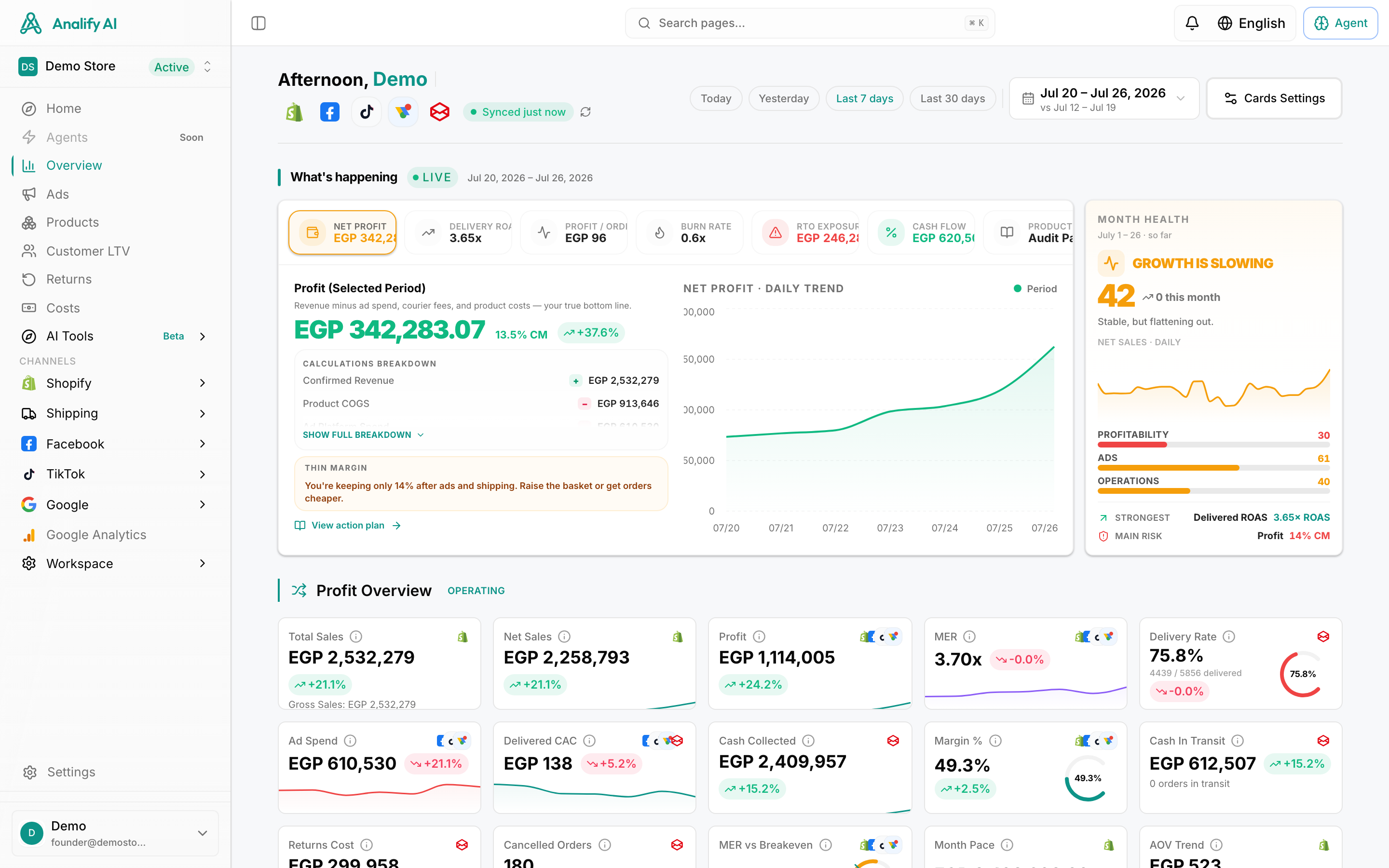
Why Ad Buying Matters for Scaling Online Stores
According to recent industry data, global digital ad spending is projected to hit $700 billion in 2025, which means competition for your customers' attention is fiercer than ever. Without a strategic approach to ad buying, you're essentially throwing darts blindfolded.
Smart ad buying allows you to:
- Reach your ideal customers when they're most likely to buy
- Control your customer acquisition costs and maintain healthy profit margins
- Scale your business predictably without guessing what works
- Compete effectively against larger brands with bigger budgets
Common Misconceptions That Cost E-commerce Owners Money
Before we dive deeper, let's clear up some dangerous myths that can sink your advertising budget:
Myth #1: "More budget always equals better results" – Wrong. Poor targeting with a big budget just means you'll lose money faster.
Myth #2: "Boosting posts is the same as running ads" – Nope. Boosted posts are limited in targeting and optimization options compared to proper ad campaigns.
Myth #3: "Set it and forget it" – Even with AI automation, successful ad buying requires monitoring, testing, and strategic adjustments.
The Business Impact: Why Smart Ad Buying Transforms E-commerce ROI
Here's something that might surprise you: organizations see a $5.44 return for every dollar spent on marketing automation, according to recent research. This isn't just about throwing money at ads – it's about implementing systems that turn your advertising into a profit-generating machine.
For e-commerce businesses specifically, smart ad buying creates compound benefits:
Immediate Impact on Profit Margins
When you nail your ad buying strategy, you're not just increasing sales – you're improving the efficiency of every dollar spent. Instead of a $50 ad spend bringing in $75 in revenue (1.5x ROAS), optimized campaigns regularly achieve 4x, 5x, or even higher returns.
Time Savings for Busy Store Owners
Most e-commerce owners wear multiple hats – you're the CEO, customer service rep, inventory manager, and marketing department all rolled into one. Strategic ad buying, especially when enhanced with AI automation, frees up hours of your time that you can reinvest in product development, customer experience, or actually taking a day off.
Predictable Scaling Potential
Once you crack the code on profitable ad buying for your business, scaling becomes a matter of increasing budgets on what's already working rather than constantly experimenting with new approaches. This predictability is what separates successful e-commerce businesses from those that struggle to grow consistently.
Analify AI — free media buyer view
Stop guessing your profit.
Connect Shopify, Meta, TikTok and Bosta in 5 minutes.
Start freeAd Buying vs Media Planning: What E-commerce Owners Need to Know
Understanding the difference between ad buying and media planning will save you from making expensive mistakes and help you decide what to handle in-house versus when to bring in help.
Media Planning: The Strategy Phase
Media planning is the strategic foundation – it's where you decide:
- Which platforms to advertise on based on where your customers spend time
- How to allocate your budget across different channels and campaigns
- What your overall advertising goals and KPIs should be
- When to run campaigns for maximum impact (seasonality, product launches, etc.)
Ad Buying: The Execution Phase
Ad buying is the tactical implementation:
- Setting up campaigns with proper targeting and bidding strategies
- Creating and testing ad creatives that convert
- Monitoring performance and making optimization adjustments
- Negotiating placements and managing relationships with ad platforms
Which Tasks You Can Handle vs When to Hire Help
For most e-commerce businesses starting out, you can absolutely handle both media planning and ad buying yourself – especially with the right tools and guidance. Here's a practical breakdown:
Handle Yourself When:
- Your monthly ad spend is under $10,000
- You're selling on 1-2 main platforms (like Facebook and Google)
- You have time to learn and implement best practices
- You're using AI-powered tools that automate complex optimization tasks
Consider Hiring Help When:
- Your ad spend exceeds $25,000+ monthly
- You're expanding to multiple new platforms simultaneously
- You need specialized expertise (like a creative director for Meta ads)
- Your time is better spent on other high-impact business activities
Budget Allocation Strategies for Small Businesses
A common question we hear: "How much should I spend on advertising?" While there's no one-size-fits-all answer, here's a framework that works for most e-commerce businesses:
- Testing Phase: Start with $30-50 per day per platform to gather data
- Scaling Phase: Gradually increase budgets on profitable campaigns by 20-30% weekly
- Maintenance Phase: Allocate 15-25% of revenue to advertising once you find your sweet spot
Analify AI — free media buyer view
Stop guessing your profit.
Connect Shopify, Meta, TikTok and Bosta in 5 minutes.
Start freeTypes of Ad Buying: Direct vs Programmatic (Choose Your Path)
Understanding the two main approaches to ad buying will help you choose the right strategy for your business size and goals.
Direct Buying: When to Negotiate Directly with Platforms
Direct buying means working directly with advertising platforms (like Facebook, Google, or TikTok) to purchase ad space. For most e-commerce businesses, this is your primary approach because:
- You maintain full control over your campaigns and data
- You can build direct relationships with platform representatives
- You avoid additional fees from intermediaries
- You get access to the latest features and beta programs
Direct buying works best when you're spending enough to get attention from platform reps (usually $5,000+ monthly per platform) and when you have the expertise to manage campaigns effectively.
Programmatic: The Automated Approach
Here's a statistic that shows where the industry is heading: programmatic advertising accounts for about 90% of digital display ads, according to recent industry analysis. Programmatic buying uses automated systems to purchase ad inventory in real-time based on your targeting criteria.
For e-commerce businesses, programmatic buying offers:
- Access to inventory across thousands of websites and apps
- Real-time bidding that optimizes for the best placements
- Advanced audience targeting based on browsing behavior
- Reduced manual work through automation
E-commerce-Specific Recommendations by Business Size
Small Businesses ($1,000-$5,000 monthly ad spend):
Focus on direct buying through Facebook Ads Manager and Google Ads. These platforms offer excellent self-service tools and don't require minimum spends for programmatic access.
Growing Businesses ($5,000-$25,000 monthly ad spend):
Stick with direct buying but consider adding programmatic display campaigns for retargeting and brand awareness. This is also when investing in a comprehensive platform like Analify becomes cost-effective.
Established Businesses ($25,000+ monthly ad spend):
Implement a hybrid approach using both direct relationships with major platforms and programmatic buying for broader reach and advanced targeting capabilities.
The Complete Ad Buying Process: 8 Steps to E-commerce Success
Now let's break down the actual process of buying ads that drive profitable results for your e-commerce business. This isn't theory – it's the exact framework used by successful online stores to scale from startup to seven figures.
Step 1: Define Your Campaign Objectives
Before you spend a single dollar, get crystal clear on what you want to achieve. For e-commerce, your primary objectives typically include:
- Driving traffic to product pages or collections
- Generating sales and revenue (conversion campaigns)
- Building email lists for future marketing
- Retargeting website visitors who didn't purchase
Step 2: Research and Define Your Target Audience
This is where many e-commerce owners go wrong – they try to target everyone and end up reaching no one effectively. Instead:
- Analyze your existing customer data to identify patterns
- Create detailed buyer personas based on demographics, interests, and behaviors
- Use platform tools like Facebook Audience Insights to validate your assumptions
- Start narrow and expand based on performance data
Step 3: Set Your Budget and Bidding Strategy
Budget planning for e-commerce requires balancing testing with scaling:
- Allocate 20% of your budget to testing new audiences and creatives
- Reserve 80% for scaling what's already working
- Choose bidding strategies that align with your goals (cost cap for profitability, bid cap for volume)
- Plan for at least 7-14 days of data collection before making major changes
Step 4: Create Compelling Ad Creative
Your ad creative is what stops the scroll and drives action. For e-commerce success:
- Use high-quality product images that showcase benefits, not just features
- Include social proof like customer reviews and user-generated content
- Test different formats (single image, carousel, video) to see what resonates
- Write copy that addresses specific pain points your product solves
Step 5: Set Up Tracking and Attribution
Without proper tracking, you're flying blind. Essential setup includes:
- Installing platform pixels (Facebook Pixel, Google Analytics)
- Setting up conversion tracking for purchases, email signups, and other key actions
- Implementing server-side tracking to improve data accuracy (especially important post-iOS 14.5)
- Creating UTM parameters to track traffic sources accurately
Step 6: Launch and Monitor Initial Performance
The first 48-72 hours are critical for campaign success:
- Monitor for any technical issues or disapproved ads
- Check that tracking is working correctly
- Look for early performance indicators (CTR, CPC, initial conversions)
- Resist the urge to make changes too quickly – let the algorithm learn
Step 7: Optimize Based on Data
Once you have sufficient data (usually after spending 2-3x your target cost per acquisition):
- Pause underperforming ad sets that show no signs of improvement
- Increase budgets on profitable campaigns gradually
- Test new creative variations to prevent ad fatigue
- Refine targeting based on audience insights and performance data
Step 8: Scale and Expand
When you've found winning combinations:
- Gradually increase budgets on profitable campaigns (20-30% increases work well)
- Duplicate successful campaigns to new, similar audiences
- Expand to additional platforms using proven creative and targeting strategies
- Continuously test new approaches to prevent performance plateaus
Analify AI — free media buyer view
Stop guessing your profit.
Connect Shopify, Meta, TikTok and Bosta in 5 minutes.
Start freeEssential Ad Buying Platforms for E-commerce (2025 Toolkit)
Choosing the right platforms for your ad buying efforts can make or break your success. Here's your complete guide to the platforms that matter most for e-commerce businesses in 2025.
Facebook/Instagram Ads: The E-commerce Powerhouse
Facebook Ads Manager remains the #1 platform for most e-commerce businesses, and for good reason:
- Unmatched audience targeting capabilities with detailed demographic and interest data
- Powerful retargeting options that can recover abandoned carts and re-engage past customers
- Multiple ad formats perfect for showcasing products (carousel, collection, dynamic ads)
- Integrated shopping features that allow purchases without leaving the platform
The key to Facebook success? Start with broad targeting and let the algorithm find your best customers, then use retargeting to maximize conversions from interested prospects.
Google Ads: Capturing High-Intent Shoppers
Google Ads excels at capturing people who are already searching for products like yours:
- Search campaigns target specific product keywords when people are ready to buy
- Shopping campaigns showcase your products directly in search results with images and prices
- YouTube ads reach customers during their entertainment and research phases
- Display campaigns provide broad reach for brand awareness and retargeting Pro tip: Start with Google Shopping campaigns if you have a product catalog – they typically deliver the fastest ROI for e-commerce businesses.
Emerging Platforms Worth Testing
While Facebook and Google should be your foundation, these platforms are showing strong potential for e-commerce:
- TikTok Ads: Particularly effective for businesses targeting Gen Z and millennial audiences. The platform's algorithm is incredibly good at finding engaged audiences, but creative needs to feel native and entertaining.
- Pinterest Ads: Perfect for lifestyle, home, fashion, and food products. Users come to Pinterest with a shopping mindset, making it ideal for product discovery.
- Snapchat Ads: Strong for reaching younger demographics, especially for trendy or impulse-purchase products.
Where Analify Fits in Your Platform Strategy
Think of Analify as your command center that sits on top of your advertising platforms, particularly Facebook and Instagram. While Facebook Ads Manager is where you'll set up campaigns, Analify provides the AI-powered optimization layer that:
- Monitors your campaigns 24/7 and catches issues before they drain your budget
- Provides expert-level recommendations for improving performance
- Automates routine optimization tasks so you can focus on strategy and growth
- Gives you unified reporting across platforms to see your complete advertising picture
This positioning makes Analify the #2 most important tool in your ad buying toolkit, right after the platforms themselves.