Stop wasting hours on manual reports. Discover the best agency reporting software with pricing, hidden cost analysis, and AI features to scale your ROI.
Let's be brutally honest for a second.
Your agency could be losing hundreds of billable hours every single month on manual client reporting. If that number doesn't make you wince, let's put it in terms that will: that's potentially tens of thousands of dollars in lost capacity. That's time that could be spent on strategy, growth, and, you know, actually getting your clients better results.
Sound familiar? We've all been there: the endless, soul-crushing cycle of downloading CSVs, wrestling with spreadsheets, and piecing together slide decks. It's more than just tedious—it's a direct threat to your agency's profitability and ability to scale.
According to one study, 48% of agencies identify tracking billable hours as their most significant operational pain point. It's no wonder when the average account manager spends over 4 hours per month on reporting for each client.
But what if you could streamline 90% of that process? The right agency reporting software transforms your agency from a data-dumper into a strategic partner. This guide is different. We're not just listing tools; we're giving you a data-backed framework to choose the right one, complete with pricing analysis, hidden cost warnings, and a focus on the AI features that will define agency efficiency.
What You'll Learn
- How to reclaim significant billable hours per month by automating reporting.
- The 6 essential criteria for choosing a reporting tool that actually scales with your agency.
- A head-to-head comparison of the 12 best tools, including a breakdown of their pricing models.
- Hidden costs to watch out for (like connector fees and API limits) that other reviews miss.
- How to leverage AI for campaign diagnostics and client-ready insights.
The True Cost of Manual Reporting
Those lost hours aren't just a number; they're a story of missed opportunities.
When your best minds are bogged down in spreadsheets, they aren't crafting brilliant new ad campaigns, fine-tuning audience targeting, or pitching new clients. This isn't just an operational headache; it's an opportunity cost that stifles growth.
Think about it: if your team is spending 4+ hours per client on reports, and each manager handles 5 clients, that's 20 hours a month, per manager, spent on rearview-mirror analysis. It's a total capacity killer.
**Pro Tip:**Stop thinking of reporting automation as a software expense. It's an investment in reclaiming billable capacity. Every hour saved is an hour you can sell back to clients for high-value strategic work, not low-value data entry. It's a direct path to a healthier bottom line and a happier team.
Analify AI — free media buyer view
Stop guessing your profit.
Connect Shopify, Meta, TikTok and Bosta in 5 minutes.
Start free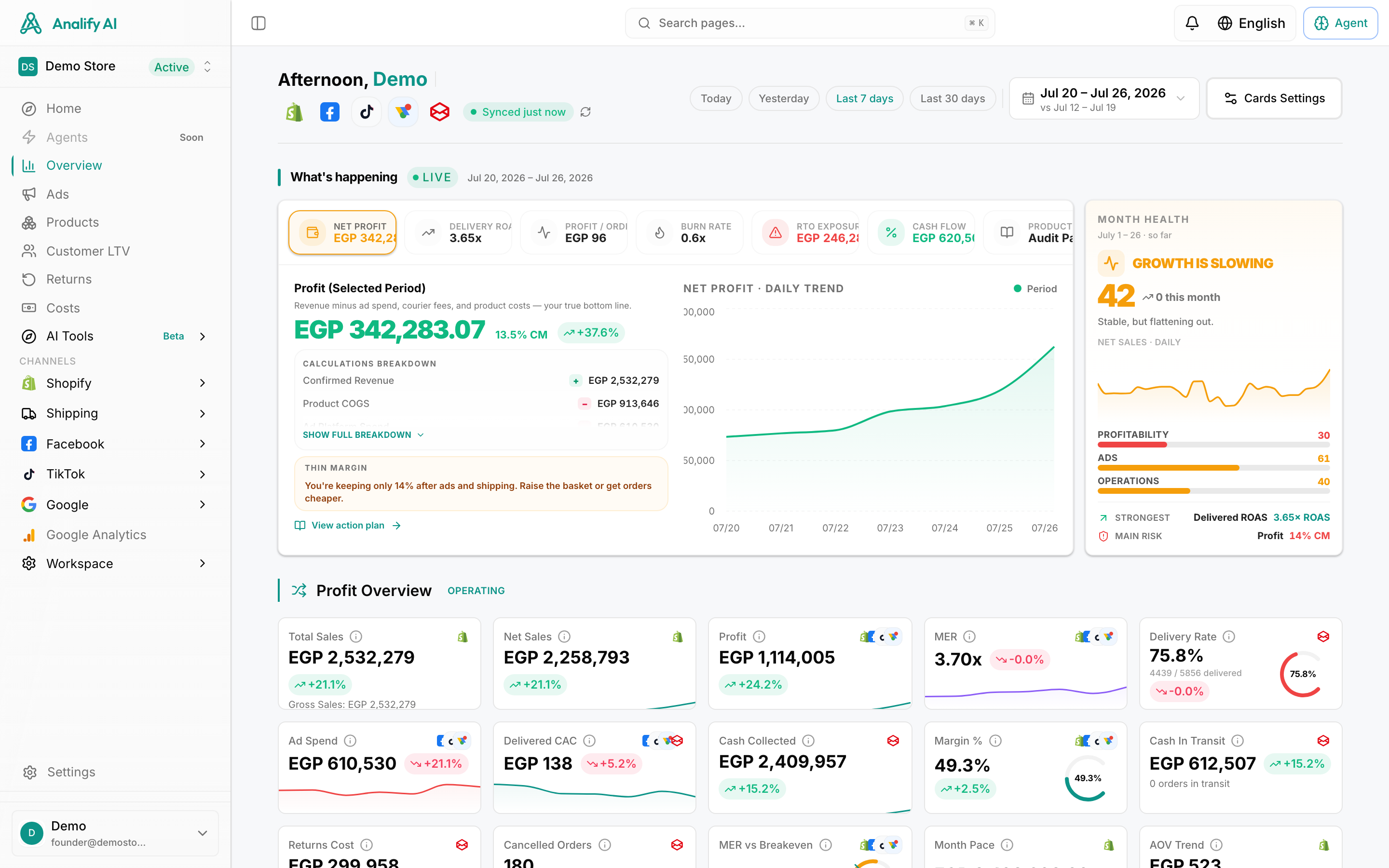
How to Choose the Right Agency Reporting Software: 6 Key Criteria
Okay, let's get real. Not all reporting tools are created equal. Before you get dazzled by shiny dashboards and slick sales pitches, let's use this framework to evaluate what truly matters for a growing agency like yours.
1. Integration Depth & Quality
It's not about the sheer number of integration logos on a pricing page. You need to ask the important questions: How often does the data refresh? How reliable are the connections? Does it support the specific metrics and custom conversions you rely on? A tool that connects to everything but only pulls basic data once a day is practically useless for performance marketing agencies that need a clear view of their digital marketing analytics.
2. Automation & Scheduling
The whole point is to save time, right? Look for streamlined and automated capabilities. Can you build a template once and have it automatically populate and send to all your clients every Monday morning? The best tools let you streamline the entire workflow, from data pulling to dashboard reporting and delivery.
3. White-Label & Customization
Your clients are paying your agency, not the software company. The ability to add your own logo, brand colors, and custom domains is non-negotiable. It reinforces your brand and makes the reports a seamless part of your service delivery.
4. AI & Diagnostic Capabilities
This is a game-changer. Basic tools show you what happened (ROAS went down). Advanced tools use AI to help you understand why (ad fatigue in a specific audience) and what to do next (launch new creatives). This is the difference between being a reporter and being a strategist, and it's why the best AI tools for advertising agencies are so crucial. A platform with a tool like Analify AI Chat lets you ask questions and get data-backed answers, empowering any team member with high-level analytical insights.
5. Scalability & Pricing Model
Your agency is going to grow, and your reporting tool needs to grow with you without breaking the bank. Scrutinize the pricing model. Do they charge per client, per user, per report, or per dollar of ad spend? A model that seems cheap for 5 clients might become cripplingly expensive at 50.
6. Ease of Use & Setup Time
Time is money. How long does it take to connect your accounts and generate your first valuable report? Some tools require weeks of custom setup and a dedicated data analyst. Other marketing analytics tools, like Analify, offer pre-built dashboards and templates that give you a comprehensive view in minutes.
The 12 Best Agency Reporting Software
We've applied our criteria to the top players on the market. Here's the breakdown.
1. Analify
Best for: Performance marketing agencies that need fast, accurate, cross-channel reporting with built-in optimization tools.